
Rules contents
Learn to Play
The Rules
Reference
Learn to Play
How a Battle Works
Start here. This page covers what you need for a first battle.
SOVL is a game of fantasy battles. You command an army of regiments, monsters and heroes, and you win by out-fighting and out-manoeuvring your opponent. Units march across the battlefield, crash into each other in melee, loose volleys of arrows and hurl spells. Dice decide how well each attack lands, but your plan decides which fights happen in the first place.
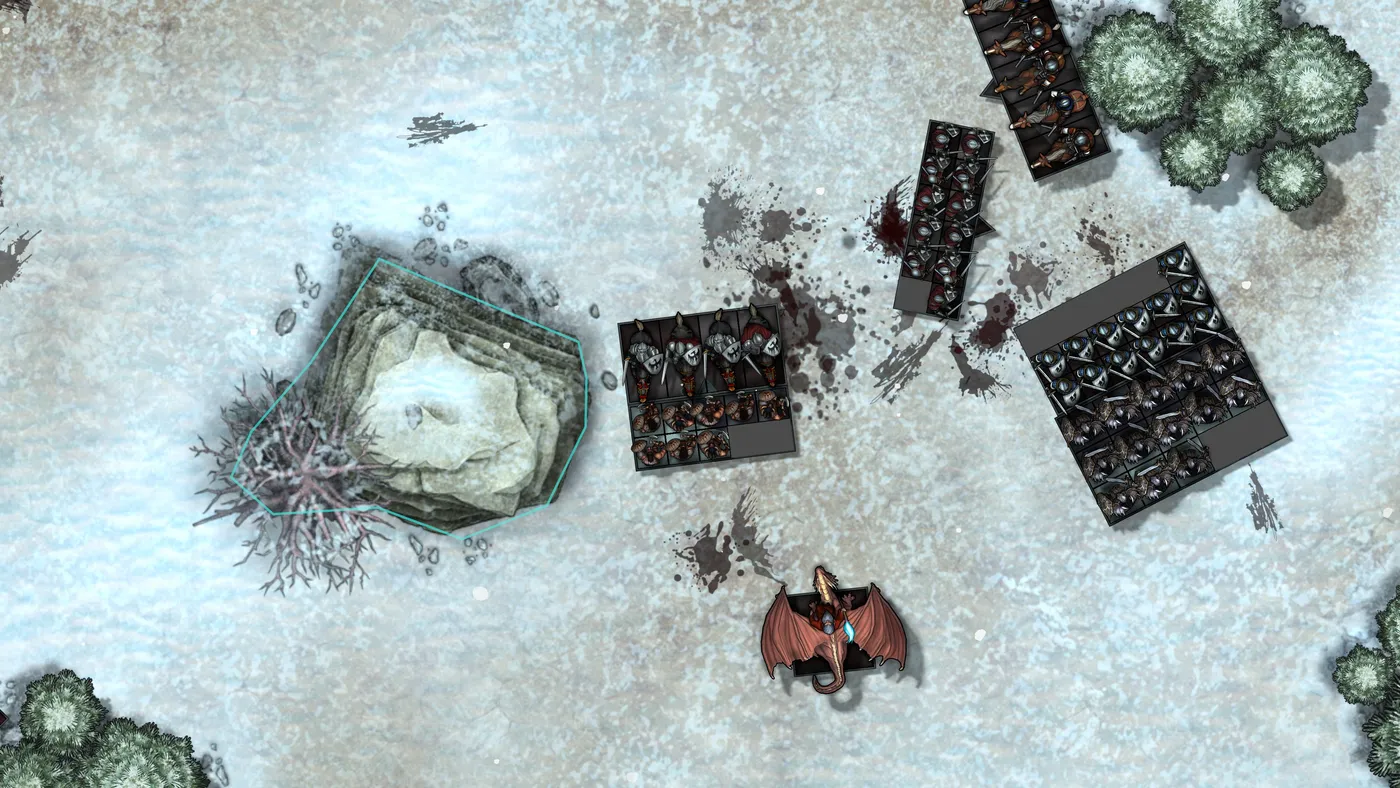
Your army
Every army comes from one faction: the stubborn Dwarf Holds, the savage Greenskin Tribes, the swift Elven Conclaves, and ten more. You build it from that faction’s units, spending points up to an agreed limit. Every army is led by at least one Commander, a hero who fights at the head of a unit.
Each unit has a stat line (Skill, Power, Defense, Attacks, Wounds and Discipline), a unit type that sets its base size and speed, and properties such as weapons, armour and special abilities. Units explains all of them. Building an Army covers points and army sizes, and the Army Builder lets you put a list together in your browser.
The turn
A battle lasts seven turns. Each turn has three phases, always in the same order:
In the Charge and Strategic phases you and your opponent take turns: you act with one unit, then they act with one, and so on. That is an alternating activation. You never get to move your whole army while your opponent waits, so every choice is a response to theirs. There are no charges on turn 1, because the armies start too far apart.
Rolling dice
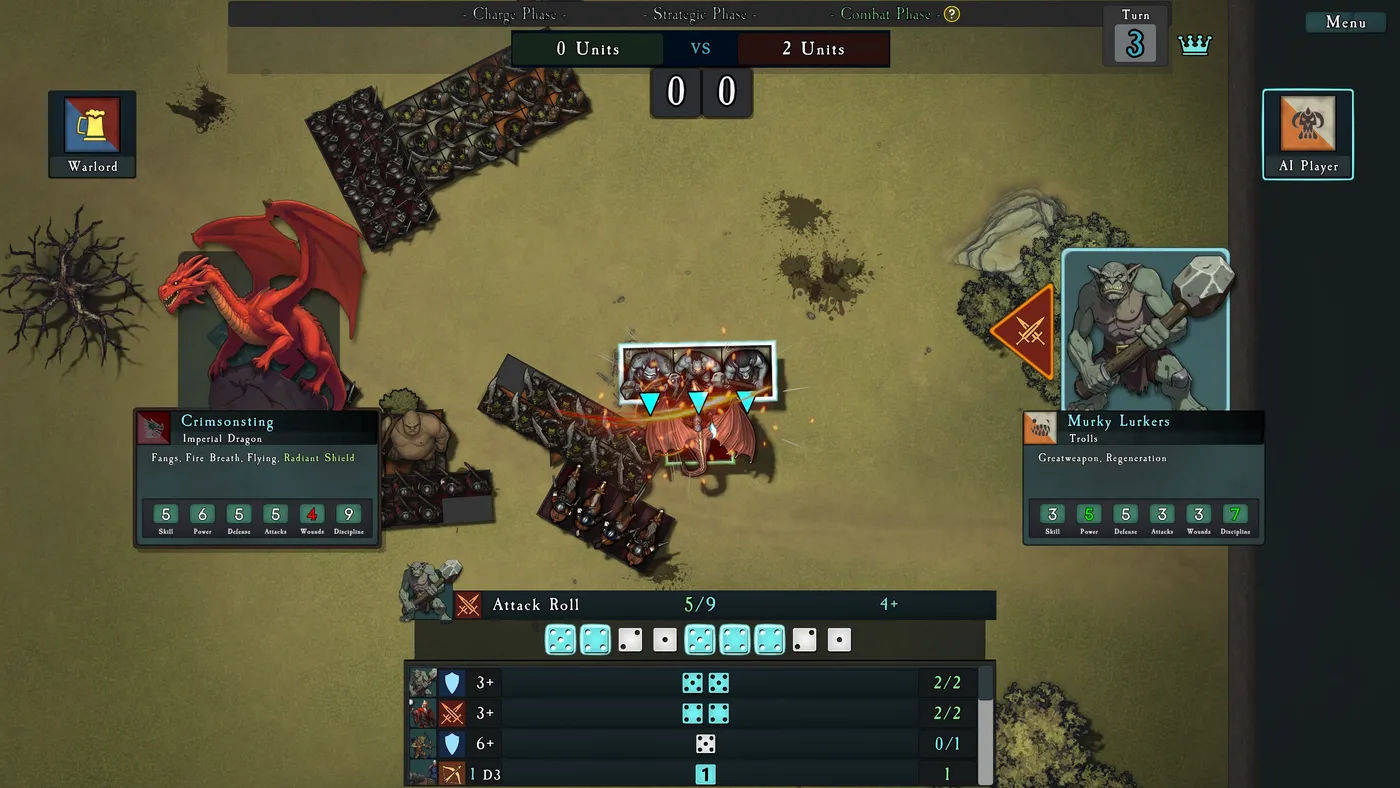
SOVL uses six-sided dice (d6). A roll needs to meet a target number: “4+” means a 4, 5 or 6 succeeds. The game rolls one die per attack and shows you the results, highlighting the successes.
Most attacks go through two rolls. First an attack roll to hit, set by comparing Skill. Then the defender makes a damage save, set by comparing the attacker’s Power to the defender’s Defense. Each failed save is one wound.
A few rolls use a D3, a die numbered 1–3. Discipline tests roll 2d6, two dice added together.
Winning
A battle ends after the Combat phase of turn 7, or earlier if one army has no units left that are neither destroyed nor fleeing. That army has been wiped out and loses.
Otherwise you count up points. You score the points cost of every enemy unit you destroyed or put to flight, and half the cost of every enemy unit you cut below half strength. In the Scoring Objectives scenario, held objectives score as well. To win on points you must lead by at least 50. Anything closer is a draw. See Scenarios and Victory.
Where to next
- Units: stat lines, unit types, ranks and commanders.
- The Battlefield: terrain, deployment and scenarios.
- The Turn, then the three phases in order.
Keep the Quick Reference open while you play. It has every table on one page.